
Lifestyle amenities
Amenities at Total Environment Yelahanka
Expected community features include parks, walking routes, gathering spaces, and the common infrastructure that supports day-to-day villa living.
Daily-use amenities
How amenities may be planned
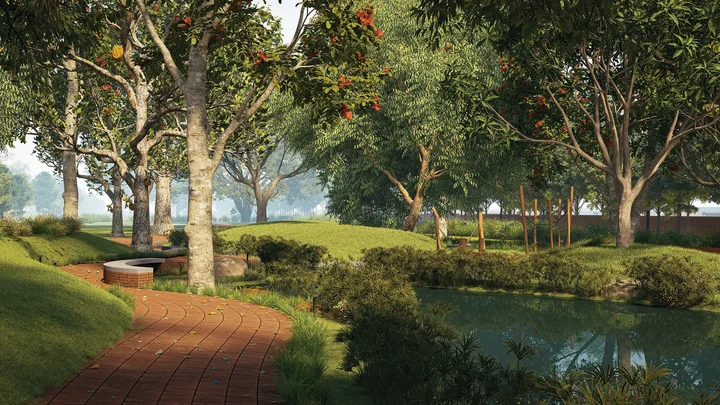
The strongest amenity value here is likely to come from how the whole site works, not just from a clubhouse. Tree-lined roads, usable parks, shaded walks, and open areas usually matter more to residents than a long feature list.
That is especially true in plotted communities, where daily life depends heavily on outdoor movement. A buyer may use a clubhouse occasionally, but roads, paths, green buffers, and small shared spaces influence the lived experience every day.
When detailed plans are released, buyers should check how evenly these spaces are distributed and how easy they are to access from different parts of the community. For visual context, see Gallery. For neighbourhood context, see Location.
Community spaces
Clubhouse and lounge spaces
Community gathering zones
Children's play pockets
Dedicated visitor parking pockets
Green infrastructure
Tree-lined internal roads
Landscaped parks and greens
Water-conscious landscape planning
Villa-friendly infrastructure
Outdoor movement
Jogging and walking paths
Wellness-focused open areas
Outdoor recreation courts
Security and controlled entry
Amenity philosophy
Designed to feel residential, not resort-like
Well-planned plotted communities feel better because daily movement is easier, greener, and more useful through the year.
What buyers should ask about amenities
Useful questions before committing to a plot
Amenity quality is not only about the list. It is also about access, maintenance, and whether the features actually support the kind of daily life buyers want.
Ask which amenities are meant for regular use, such as walking routes, parks, play pockets, and community seating zones.
Check whether open spaces are spread across the layout or concentrated in a small part of the project.
Long-term value depends on whether the planted areas, roads, and common facilities can be maintained well after handover.
This matters because amenity quality in plotted projects is often judged years later through street comfort, tree maturity, walkability, and the condition of shared spaces. A practical buyer usually asks as much about maintenance and distribution as about the initial amenity list.
Another point buyers often miss is that amenities also affect plot desirability. Parcels near well-used parks or quieter green buffers may feel better over time, while parcels too close to busy gathering areas may not suit buyers who value privacy. That is why the amenity conversation often overlaps with both layout and pricing.
In other words, amenities should not be read only as a checklist. They are part of how the neighbourhood will function once people begin to live there. Buyers who judge them through that lens usually make clearer decisions about both parcel choice and long-term comfort.
Need the latest update?
Want the latest amenity note and brochure?
We can share the latest amenity note, open-space updates, and brochure material as launch communication evolves. That helps buyers understand not only what is promised, but how those spaces may actually sit within the layout.
That extra context is useful when buyers are deciding whether a project's common spaces genuinely support the kind of residential life they want, or only look good in isolation.
In plotted communities, this is often where the difference between a feature list and a genuinely liveable neighbourhood becomes clear. Buyers usually feel that difference in the quality of movement, shade, comfort, and how often the common areas are likely to be used in everyday life by residents over time.