
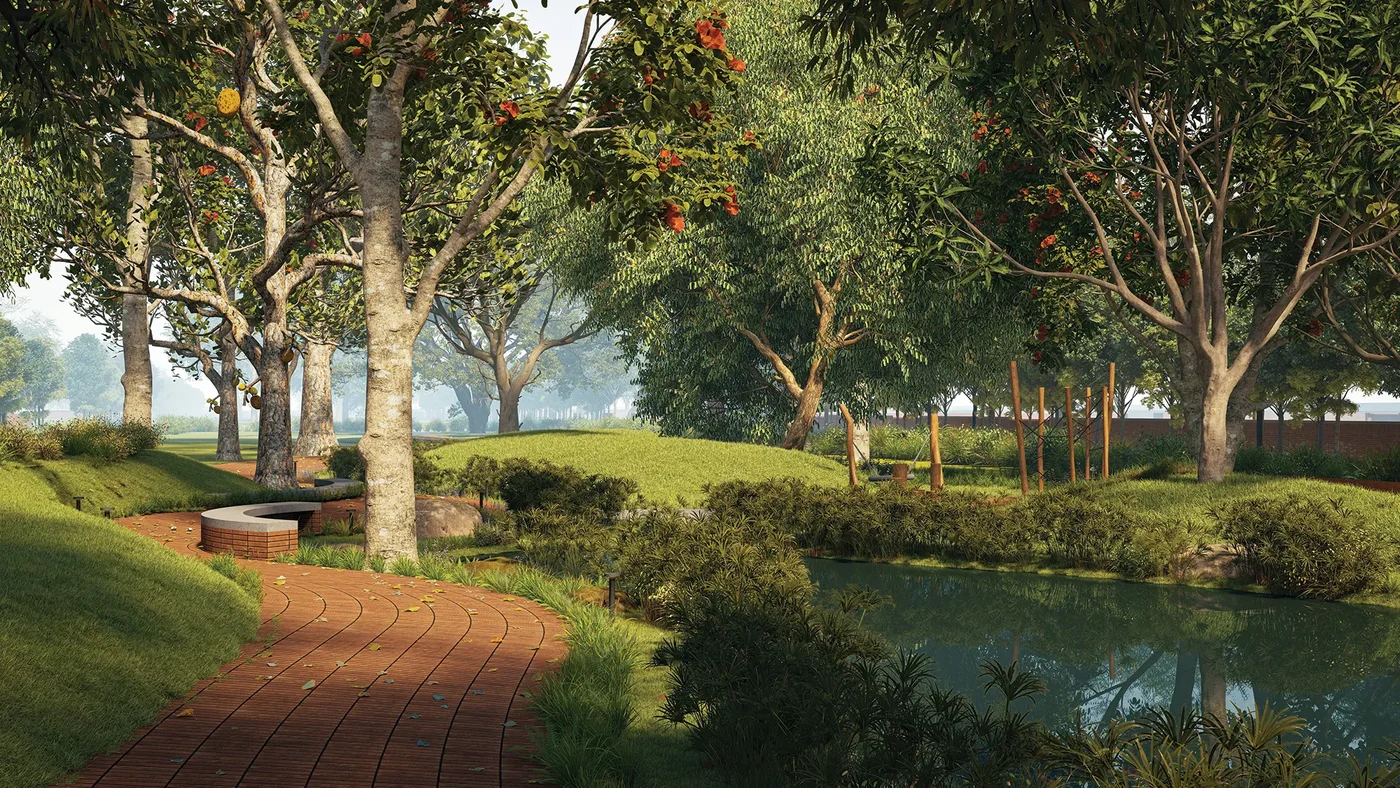
Plot typologies
Plot Options at Total Environment Yelahanka
A summary of the plot sizes currently expected here and how different parcel types may suit different home plans and budgets.
Available formats
Expected parcel configurations
Current indications point to entry, mid-sized, and larger parcels suited to custom villas, garden space, and different budget ranges.
Best for buyers who want a manageable overall ticket and a compact villa layout.
Gives more room for a wider home, extra parking, and a better setback-to-built ratio.
Most relevant for buyers who want larger gardens, broader frontage, or a more customised home program.
Parcel choice
What matters beyond plot size
Size is only the starting point. Buyers should also look at frontage, corner position, road width, park adjacency, privacy, and the usable building envelope on each plot.
A 2400 sqft parcel may be enough for many households, but it requires a clearer build program and more disciplined planning. A 3000 sqft parcel usually gives more breathing room for setbacks, parking, service areas, and a better balance between indoor space and outdoor use. Larger parcels often appeal to buyers who want broader gardens, more elaborate home programs, or a stronger sense of separation from neighbouring plots.
Odd-sized parcels deserve special attention. They are not automatically better or worse; they simply require more careful reading. Sometimes they offer a stronger edge condition or better openness. In other cases, the irregular geometry makes planning less efficient. Buyers should not assume premium value without seeing the actual plot relationship and buildable area.
Price helps with current budget guidance, while Master Plan helps you judge where each parcel may sit within the community.
2400 sqft: More efficient entry point for custom home planning
3000 sqft: Better suited to buyers wanting larger built areas and stronger outdoor zones
5000 sqft+ Best aligned with expansive gardens and more elaborate villa programs
Odd-sized parcels: Useful for buyers open to more tailored site planning opportunities
Need the latest update?
Need size-wise guidance before launch?
Reach out for parcel comparisons, size recommendations, and updates on which configurations are expected to release first. A short early conversation can often eliminate the wrong size band quickly.
That is usually enough to prevent buyers from spending time on parcels that do not match their actual home plan or budget.
How buyers usually shortlist parcels
Three practical filters before making a choice
Most buyers narrow down options faster when they decide in advance what matters most: total budget, home program, or plot position.
If you know the approximate home size you want, it becomes much easier to eliminate plots that are too tight or unnecessarily large.
Some buyers are willing to adjust size if they can secure a better road, corner, park-facing, or quieter plot position.
Others start with an overall budget and then work backward to the most efficient parcel size within that range.
There is no single right method. What matters is making the trade-off consciously. That is usually the difference between a buyer who feels clear about the shortlist and a buyer who keeps comparing parcels without moving toward a decision.
The better the early shortlist, the easier it becomes to decide whether the project is working for your actual requirement or only for an abstract idea of a larger parcel. In plotted developments, that distinction saves a lot of time.